Cold Water Shock Explained: How to Stay Safe in Cold Water | UK Sea Swimming Guide
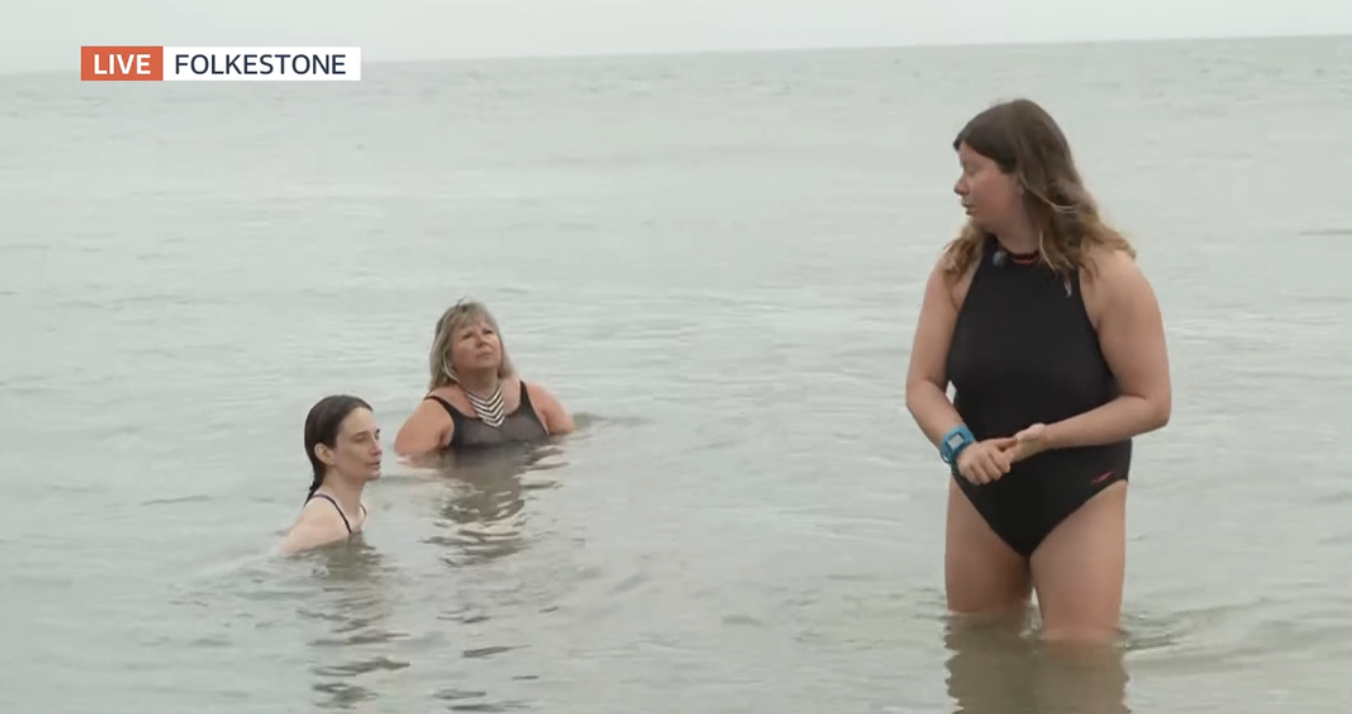
I recently went on Good Morning Britain to demonstrate this with my student and talk about how to stay safe in cold water. This guide breaks down exactly what you need to know.
By Kirsty Hogben – Open Water Swim Coach & Sea Safety Educator (featured on Good Morning Britain)
Cold water can be powerful, healing, and life-changing, but it also comes with real risks that every swimmer should understand.
One of the most important is cold water shock.
I recently went on Good Morning Britain to demonstrate this with my student and talk about how to stay safe in cold water.
This guide breaks down exactly what you need to know.
Whether you’re swimming in Kent, training in the sea, or looking to build confidence through my online cold water safety sessions, this information is essential for every open water swimmer.
I work with swimmers in Kent and across the UK, both in-person and online, to help build confidence, safety awareness, and calmness in cold water.
What is Cold Water Shock?
Cold water shock is the body’s immediate involuntary response when you suddenly enter cold water.
It is not about fitness or ability - it is a reflex response of the nervous system, and the most dangerous part happens in the first 30–90 seconds.
The Gasp Reflex (Why People Get Into Trouble)
The key danger is the involuntary gasp reflex.
When your skin hits cold water suddenly, your body reacts by:
Gasping sharply for air
Breathing rapidly and uncontrollably
Losing control of breathing rhythm
If your head is underwater when this happens, it can lead to water inhalation.
This is why many cold water incidents happen in strong swimmers - it is not about skill, it is about physiology.
Why It Happens More in Spring
Cold water shock is often worse in spring and early summer.
This is because:
The air feels warm
People feel confident and under-dressed
The water is still very cold
This temperature contrast between warm skin and cold water increases the shock response.
In Kent, this is especially common along the coast and estuaries in early season swims.
How to Prevent Cold Water Shock
You cannot eliminate cold water shock completely- but you can reduce and control it massively.
1. Enter the water slowly
Never jump straight in.
Instead:
Walk in gradually
Let water rise slowly over your body
Pause at waist/chest level before going further
This gives your breathing system time to adapt.
2. Control your first breaths
Focus on:
Slow nasal breathing
Long exhale
Keeping your mouth closed on entry
Your only job in the first minute is breath control.
3. Float to Live
If you feel overwhelmed:
Roll onto your back
Spread your arms and legs
Float
Breathe slowly until your body settles
This is a survival response, not a failure.
4. Acclimatise your body over time
Regular exposure builds tolerance:
Cold showers
Short dips
Gradual seasonal progression
Consistency is more important than intensity.
Cold Water Safety in Kent
If you are swimming in Kent beaches, estuaries, or outdoor spots, conditions can change quickly:
Cold currents
Wind chill
Sudden temperature drops
Always check:
Water temperature
Wind direction
Entry and exit points
Never swim alone when conditions are cold or unpredictable.
Learn Cold Water Safety With Me (Kent & Online)
I run open water swim coaching and sea safety education sessions in Folkestone, across Kent and online.
My focus is:
Cold water shock education
Confidence in open water
Breath control techniques
Safe sea entry practice
Nervous system regulation in cold water
These sessions are designed for beginners, nervous swimmers, and people building confidence in the sea.
Cold water is not something to fear- but it is something to understand.
Once you understand the gasp reflex, breath control, and safe entry, your confidence in the sea changes completely.
And that is where real freedom in open water begins.